AI is changing our work so fast that some days it feels like an illusion. People adapt to change slowly and that's normal. Most teams still hire and grow engineers the way they did a few years ago. Things keep happening as if nothing changed.
But the new reality is already here. William Gibson said it long before any of this: "The future is already here - it's just not very evenly distributed."
Change this fast creates questions faster than answers. I have plenty of questions and very few clear answers.
My years in academia left me with a habit of writing questions down and coming back to them from time to time. Some get answered. Some turn out to be the wrong questions. Either way you learn something, right?
So here are the questions I keep coming back to lately.
How should we interview engineers now?

Figuring out who is sitting in front of you was always hard. Before AI it was a bit simpler. You asked someone to write code and the code told you a lot. Now almost nobody writes code by hand, so asking for it in an interview feels a little strange.
I remember interviewing for an engineering manager position at Google and getting a whiteboard coding session. It felt awkward - solving a LeetCode problem by hand, the kind I'd never run into in this role's daily work. But there is something right about it.
Watching a person solve a problem live still shows how they think. Some stop at the first thing that works. Others go a few iterations deeper and see the underwater stones early. How they make trade-offs when there is no perfect answer - that tells you more than code.
System design matters even more now. I want to see that a person knows how to build production-grade system that is reliable, secure and holds up under real load. An agent can write every line of it, but it won't own the consequences.
My guess: keep the whiteboard, focus on thinking. Give system design more time than before.
How do engineers grow these days?
Most good engineers I know became good by struggling. They took ownership of something, went deep and kept solving different problems until they built instinct and taste. Nobody handed it to them.
With AI you can go two ways. You can delegate your thinking to it completely and slowly wash yourself out of the market. Or you can use it to learn faster than anyone could before and become an expert in a fraction of the time.
So the way I try to help people grow now is simple - give them ownership of an area or component (honestly, this part hasn't changed - it's been true for a while). When they lack context or don't know something yet, that's what AI is for. Ask it questions and argue with it until it makes sense. The decisions stay theirs.
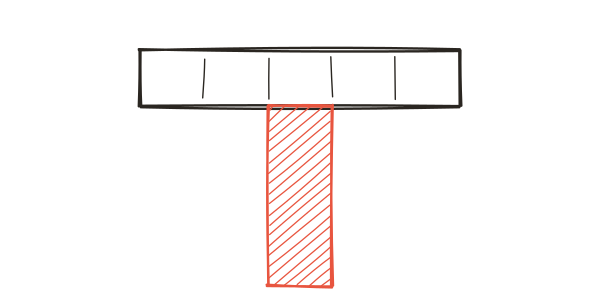
Another thing I notice is that the borders between specialisations are fading - I believe we will not see "frontend/backend engineer" titles in 1-2 years. What every org needs is the same as years ago: smart and independent T-shaped people who go deep in one thing and feel comfortable with everything around it.
My guess: give people a real area to own and let them use AI to learn faster. Just don't let them use AI to skip the thinking.
Does your org need juniors?
Ask the business and today the answer often sounds like no. Agents take the small tasks - they're faster, cheaper and never need onboarding.
I still think juniors are needed. What changes is what makes a junior valuable. The energy and curiosity they bring now count for more than what they already know.
It has also never been easier to solve a problem without thinking about it at all. Paste the error, accept the fix, close the ticket. Keep doing that for a few years and you get an engineer with years of experience who learned almost nothing. Someone who solved the problem but can't explain how.
At the same time juniors have an opportunity nobody had before. You can ask AI the deeper questions you'd be too shy to ask a senior. Ask it to explain the trade-offs. Ask it to put together a personal course on whatever you're curious about. That's a faster way to learn than any of us had.
My guess: yes, we need juniors. Passion, energy and soft skills matter more than the number of years on a CV.
Does deep knowledge still matter?
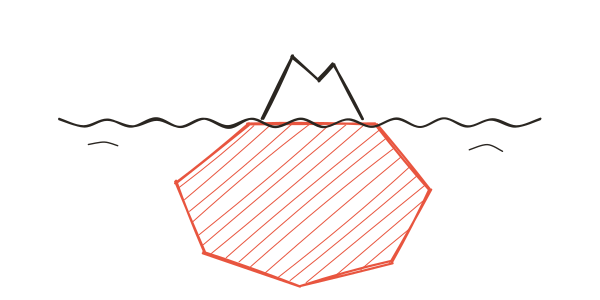
I studied AI back when it mostly meant knowledge graphs and ontologies. Almost none of that is how today's AI works. And yet it's the reason I have a better sense of what happens inside today's models and why.
Fundamentals look like a bad investment right now. Why learn how caching really works if an agent adds a cache in thirty seconds? Because adding a cache is the easy part. Deciding what to cache, for how long and what happens when the data goes stale is the real work. An agent will happily give you an answer. Someone has to know whether it's the right one for your system.
I don't expect agents to get worse at this. They'll get better. But someone still has to decide what to build next and how, review what the AI suggests and guide the whole organization around them. That takes judgment and taste. Both grow out of depth and right now few skills are in higher demand.
My guess: depth in fundamentals matters more than ever. Knowing the quirks of a particular framework or library is worth less every year.
How do I know someone is good?
For years I had a simple definition of a senior engineer: someone you can give a vague problem to and get a working solution back.
That is now uncomfortably close to a description of a good agent.
Output was never a great signal anyway. PRs merged, tickets closed. Today an engineer with a good agent can open 20 pull requests in an hour. That tells me very little about the engineer.
So I look elsewhere. What did they decide and how did they get there? What did they catch in review that the agent missed? When something broke did they take ownership and act or wait for someone else to pick it up?
My guess: look at decisions, thought process and ownership. Diffs tell me less every month.
Reading this back, most of my guesses circle the same thing. Someone still has to think and own the result. Those are the people I want to hire and help grow.
If you have better answers, write to me.